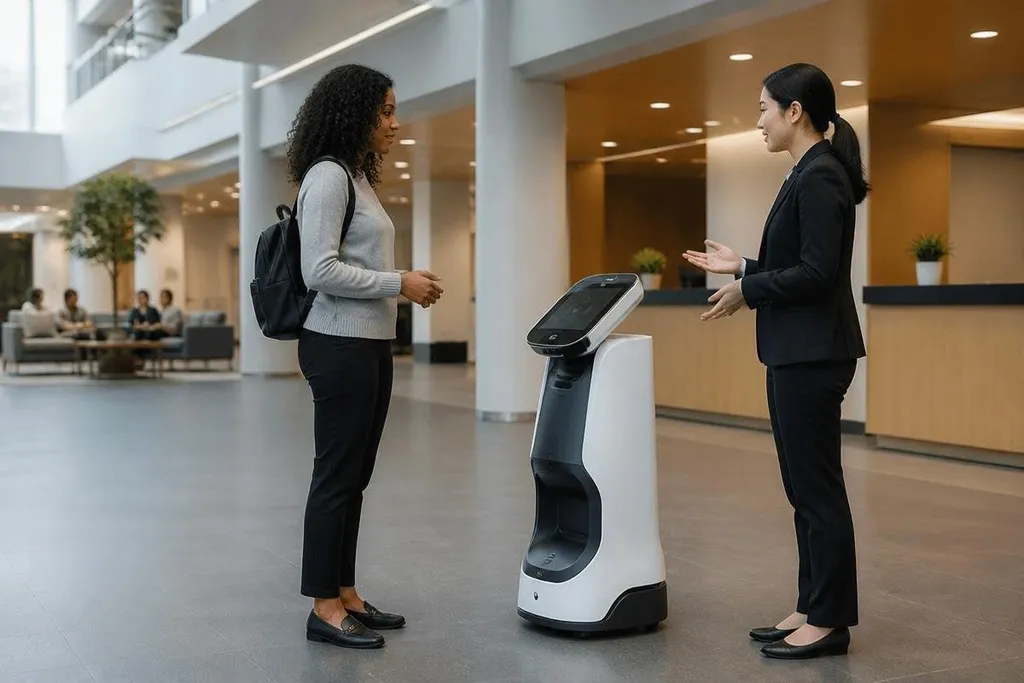
A customer service robot can greet visitors, answer routine questions, guide people, or carry items across a site. The business opportunity sits in the task around the robot: setup, software, safety, maintenance, and the data each interaction creates.
- Site work: Map the building, connect the robot to local systems, and keep its answers current.
- Staff support: Move routine questions away from reception, help desks, and service counters.
- Ongoing income: Sell maintenance, content updates, remote help, and reports after installation.
The strongest companies will sell a working service, not a machine placed in a lobby.
Where the work begins
Hotels, hospitals, offices, shops, transport sites, and public buildings all receive the same basic requests: directions, opening hours, room numbers, queue details, and pickup instructions. A robot can handle these questions when its map and answer system match the site.
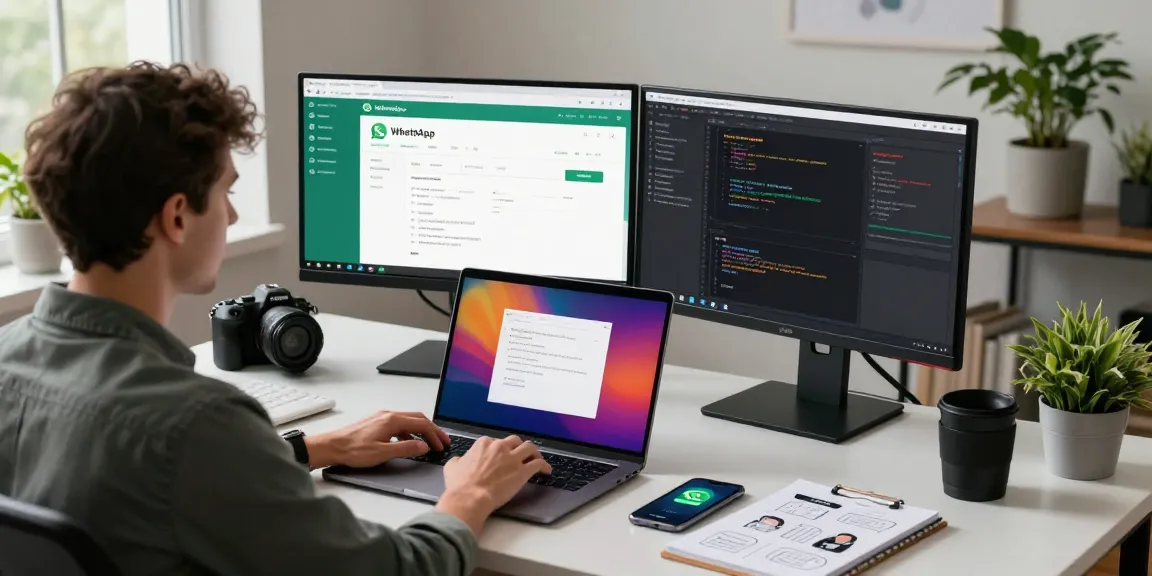
That creates work before deployment. A provider can survey the building, mark accessible routes, list common questions, add local names, and connect the robot to a booking or ticket system.
Each site needs its own setup because a hospital entrance and a hotel lobby don't use the same language or rules.
The work continues after launch. Staff need a clear way to report a wrong answer, a blocked route, or a change in opening hours. A service contract can cover those updates instead of leaving the customer with a robot that gives yesterday's instructions.
Four ways to earn from the robot
Hardware sales may bring the first payment, but several tasks create longer work around the installation.
Site integration connects the robot to doors, screens, ticket systems, booking tools, or a customer database. The provider can charge for each system it sets up and tests.
Content management keeps answers, maps, prices, room numbers, and event details accurate. This suits a monthly service because the information changes even when the hardware does not.
Remote operations give staff a way to take over when the robot meets a request it can't handle. A remote worker can answer a question, guide the visitor, or send the request to a human team.
Maintenance and training cover battery checks, sensor cleaning, software updates, fault reports, and staff lessons. A short training session can show reception workers how to pause the robot, call for help, and report a problem.
Operators and suppliers can use Robot24.com robotics coverage to check the companies, machines, and trial settings behind a service model before pricing it for customers.
The limits a buyer must price
Customer service robots work best with bounded tasks. A fixed route, a known building, and a short list of approved answers make planning easier. Open-ended requests, crowded rooms, poor lighting, stairs, and sudden layout changes add work for people nearby.
Privacy needs a written plan. A robot may use cameras, microphones, maps, or visitor data, so the buyer must decide what it stores, who can view it, and when the data is deleted. Those choices affect the contract as much as the hardware price.
The robot also needs a human owner. Someone must check its answers, watch failure reports, update site information, and decide when a person takes over. I'd start with one repeated task and one location, then expand after the service records show where the robot helps.
A practical buying checklist
Before paying for a customer service robot, ask the supplier to show:
- The exact tasks the robot will handle during a normal shift
- The number of staff hours needed for updates and remote help
- The systems it can connect to, including ticketing or booking software
- The data it stores, the retention period, and access controls
- The response when a sensor, network link, battery, or route fails
- The full cost for hardware, installation, software, training, and support
A useful pilot has a start date, a named site, a fixed task list, and a review date. It should record questions answered, human handoffs, route failures, service outages, and staff time spent keeping the system current.
That record gives the business a real choice: extend the service, change the task, or stop buying more robots. The next sale should follow measured work at one site, not a promise about every customer interaction.